Exclusive Savings on Plumbing Services!
Initial Investment: Equipment and Installation Costs
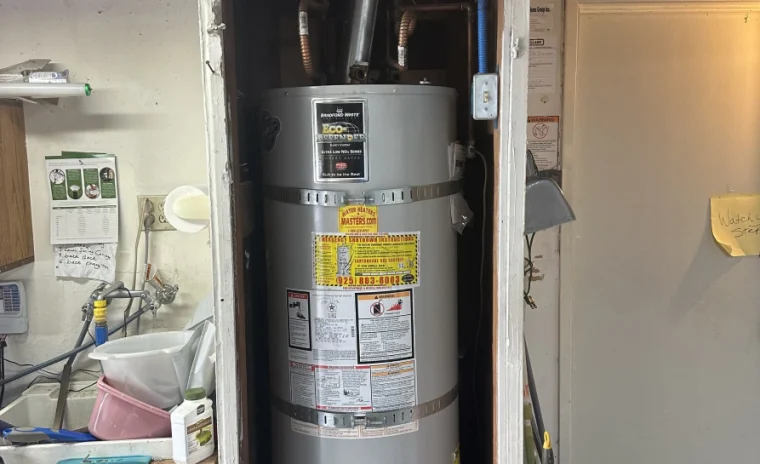
The upfront cost represents one of the most significant differences between tankless and traditional storage tank water heaters. Traditional tank systems typically range from $800 to $1,500 for the unit itself, while tankless models start at $1,500 and can exceed $3,000 for high-capacity systems suitable for larger households. These figures reflect equipment costs only, before installation labor.
Installation expenses vary considerably based on system complexity and existing infrastructure. Traditional tank replacements generally cost $1,200 to $2,500 total when replacing a similar unit, as the water lines, gas connections, and venting often require minimal modification. Tankless systems, however, frequently demand $2,500 to $4,500 in total installation costs because they require upgraded gas lines (for gas models), new electrical circuits (for electric models), dedicated venting, and sometimes water line reconfiguration to accommodate the different placement options.
Homes in Concord, CA built before 1990 may need additional upgrades to meet current building codes when installing tankless systems, potentially adding $500 to $1,500 to the project. Experienced plumbing services professionals assess your existing infrastructure during consultations to provide accurate estimates. The location you choose for the unit also impacts cost: outdoor installations may reduce venting expenses, while indoor placements offer freeze protection but require proper ventilation.
Permit fees and inspection costs typically add $100 to $300 regardless of system type. Quality installation by licensed plumbing contractors ensures your system operates at peak efficiency from day one, maximizing your return on the initial investment and preventing costly callbacks for improper installation issues.
Operating Costs: Energy Efficiency and Monthly Expenses
Monthly operating costs reveal where tankless systems begin recovering their higher initial investment. Traditional storage tank heaters maintain 40 to 80 gallons of water at temperature around the clock, creating standby heat loss even when no hot water is being used. This continuous energy consumption typically results in monthly utility costs of $30 to $50 for an average household, depending on local energy rates and usage patterns.
Tankless systems heat water only on demand, eliminating standby losses entirely. This fundamental operational difference translates to energy savings of 24% to 34% for households using 41 gallons or less of hot water daily, according to Department of Energy efficiency data. Larger households using 86 gallons or more daily still achieve 8% to 14% savings. For a typical Concord household, this means monthly costs of $20 to $35, saving $10 to $15 per month or $120 to $180 annually.
California energy rates, which rank among the highest in the nation, amplify these savings. Additionally, tankless systems qualify for various utility rebates and tax incentives that can reduce the effective purchase price by $300 to $600. The efficiency advantage becomes more pronounced during Concord’s mild winters when hot water demand for space heating is minimal but consistent hot water for showers and appliances remains necessary.
Water heating accounts for approximately 18% of home energy use, making it the second-largest energy expense after heating and cooling. Choosing an energy-efficient system impacts both your monthly budget and long-term environmental footprint, particularly in California where water and energy conservation remain ongoing priorities.
Lifespan and Maintenance: Durability Over Time
System lifespan directly affects total cost of ownership and replacement frequency. Traditional tank water heaters typically last 10 to 13 years with proper maintenance, though many homeowners replace units after 8 to 10 years as efficiency declines and minor leaks develop. The constant heating and reheating cycles, combined with sediment accumulation and tank corrosion, gradually degrade performance and structural integrity.
Tankless systems offer significantly longer service lives, typically 15 to 20 years or more when maintained properly. The absence of a storage tank eliminates corrosion risks, while replaceable components like heat exchangers and flow sensors extend functional life. This extended lifespan means you may purchase only one tankless system during the period you would replace a traditional tank twice, substantially affecting lifetime costs.
Maintenance requirements differ between systems. Traditional tanks need annual flushing to remove sediment buildup, anode rod inspection every 2 to 3 years, and periodic pressure relief valve testing. Neglecting these tasks accelerates deterioration and can void warranties. Tankless systems require annual descaling in areas with hard water (common in parts of Concord), filter cleaning, and periodic inspection of electrical or gas components.
Professional maintenance through qualified plumbing contractors ensures both system types operate efficiently and reach their full lifespan potential. Proper drain cleaning and water quality management prevent scale buildup that reduces efficiency and shortens equipment life. The longer replacement cycle for tankless systems reduces the frequency of major plumbing projects and the associated disruption to your household, adding convenience value beyond pure financial considerations.
ROI Analysis: Payback Periods and Financial Break-Even Points
Calculating true ROI requires comparing total lifetime costs rather than focusing solely on purchase price. Consider a typical scenario: a traditional 50-gallon tank costs $2,000 installed versus $3,500 for a comparable tankless system, creating a $1,500 price gap. With annual energy savings of $150, the tankless system reaches simple payback in 10 years. However, this calculation overlooks the complete financial picture.
Over a 20-year period, you would replace a traditional tank once (another $2,000 investment at year 12), bringing total spending to approximately $4,000 for equipment plus $12,000 in energy costs, totaling $16,000. The tankless system requires no replacement during this period, costing $3,500 initially plus approximately $9,600 in energy costs, totaling $13,100. This represents $2,900 in net savings over two decades, plus the convenience of avoiding a mid-period replacement project.
Several factors influence individual ROI calculations. Households with high hot water usage see faster payback periods due to greater energy savings. Homes planning significant plumbing remodeling can install tankless systems with reduced labor costs when other plumbing work is already underway. Rising energy costs accelerate savings, while available rebates and incentives improve initial economics.
For homeowners planning to remain in their Concord property long-term, tankless systems typically deliver superior financial returns. Those expecting to move within 5 to 7 years may not fully recover the premium, though energy-efficient upgrades increasingly attract buyers and can enhance resale value. Professional plumbing contractors help evaluate your specific situation, usage patterns, and existing infrastructure to determine which system offers the best value for your circumstances and timeline.
Local Considerations for Concord Homeowners: Making the Right Choice
Understanding when your investment pays for itself helps make an informed decision between water heater types. The payback period varies considerably based on household size, usage patterns, local utility rates, and system efficiency. For most residential applications in California, tankless units reach financial break-even between 6 and 12 years after installation, depending on these variables.
Households with higher hot water demand see faster payback. A family of four using 80 gallons daily might save $200 to $350 annually on energy costs with a tankless system, reaching break-even in approximately 7 to 8 years. Smaller households or those with lower usage may require 10 to 12 years to recover the premium. Beyond the break-even point, tankless systems continue generating savings for another 8 to 12 years of their remaining lifespan, potentially totaling $2,500 to $4,000 in cumulative energy cost reduction over the unit’s full service life.
Consider also the indirect financial benefits that affect total ROI. Tankless systems occupy significantly less space, freeing valuable square footage that might be repurposed or add property value. They eliminate the risk of catastrophic tank failures that can cause thousands in water damage, a scenario traditional tanks present throughout their lifespan. Modern tankless models also qualify for utility rebates and federal tax credits in many cases, reducing the effective purchase price by $300 to $600 and shortening payback timelines accordingly.
Professional installation by qualified plumbing contractors ensures optimal system performance and maximum efficiency, directly impacting your return on investment. Improper sizing or installation compromises energy savings and can void manufacturer warranties, undermining the financial advantages that make tankless systems attractive.